
What is RFID and why is it revolutionizing inventory management ?
RFID, or Radio Frequency Identification, is not just a simple tracking tool: it is a wireless communication technology that allows for the automatic and instantaneous identification and location of objects.
Unlike traditional barcodes, which require manual scanning, RFID captures information at a glance and without contact, providing real-time visibility into inventory and logistics flows. This ability to collect and centralize data seamlessly radically transforms inventory management, reduces errors, and enhances product traceability..
For businesses, this translates into a significant time savings, better control of inventory and flows, as well as an optimization of the entire supply chain. By adopting RFID, they can not only improve operational efficiency but also provide a more reliable and seamless experience for their customers.
Understanding how RFID works
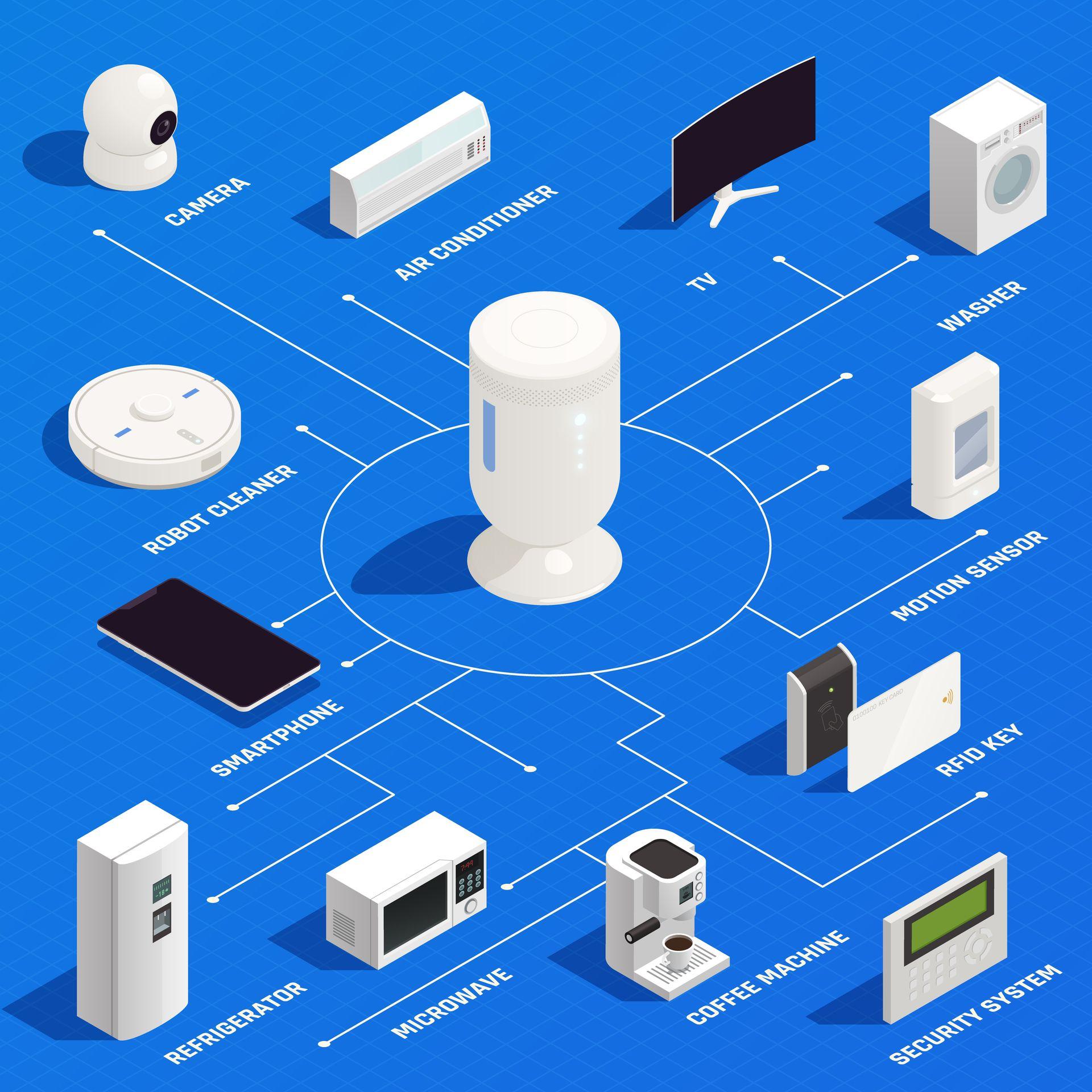
RFID works by using tags, which are attached to the objects you want to track. RFID tags contain antennas that allow RFID readers to communicate with them using radio waves. When the RFID reader sends a signal to the tag, the tag returns a response that contains the information stored in the tag’s RFID chip.
The advantages of RFID for businesses
A faster and more reliable inventory management
Thanks to the simultaneous reading of multiple articles, companies can drastically reduce human errors and save considerable time. Inventories become almost instantaneous, and the data collected is automatically updated in the ERP system, such as Odoo, ensuring accurate and real-time information for restocking planning and decision-making.
Total traceability and visibility
RFID allows for tracking each product throughout its lifecycle, from production to sale. This traceability provides complete visibility over inventory and logistics flows, which is particularly valuable in sensitive sectors such as industry, healthcare, or agri-food. Integration with an ERP system enables the centralization of this information and effective management of batch and serial numbers, thereby ensuring compliance and quality control.
Reduction of losses and prevention of errors
By providing real-time tracking, RFID helps reduce losses and theft as well as preparation or shipping errors. Anomalies can be detected immediately, allowing for issues to be corrected before they impact productivity or customer satisfaction. This accuracy helps optimize operational costs and secure the supply chain.
Enhanced operational efficiency
RFID allows automating repetitive tasks. Teams save time on inventories, product tracking, and flow management, enabling them to focus on higher value-added missions. In Odoo, the collected data can automatically trigger actions such as creating orders, updating stock, or generating analytical reports, thereby increasing the responsiveness and smoothness of operations..

A very remarkable aspect is its ability to store much more information than traditional barcodes or labels. RFID chips can store information about product specifications, manufacturing date, expiration date, serial numbers, etc..
The limits of RFID
Like any technology, RFID has certain constraints that are useful to know before embarking on a project. Understanding these limitations allows for better anticipation of challenges and optimization of RFID use in a professional environment.
The costs of implementation and maintenance
One of the most frequently mentioned aspects concerns costs. Implementing an RFID system requires the purchase of readers, tags, and sometimes additional equipment, as well as integration with an ERP like Odoo. In addition, there are training costs for the teams and system maintenance. However, these costs should be viewed as a long-term investment: the reduction of errors, the speed of inventories, and the optimization of flows generally allow for a quick return on the project.
Technical and environmental constraints
RFID relies on radio waves, which can lead to certain limitations. Metallic or liquid materials can interfere with tag reading, and the range of readers can vary depending on the layout of the spaces. Nevertheless, these technical constraints can be anticipated through appropriate equipment selection, prior testing, and thoughtful system design. By working with experts, it is possible to tailor the technology to the specific needs of each business and avoid reading issues.
Conclusion
RFID is a strategic technology that transforms the management of flows, stocks, and business processes. Its advantages, such as speed, precision, traceability, and automation, allow it to gain in efficiency and competitiveness while offering a better customer experience. Technical, financial, or organizational constraints are not obstacles but aspects to be anticipated in order to maximize the return on investment. Integrated into an ERP like Odoo, RFID becomes a powerful tool capable of modernizing operations and supporting business growth in an increasingly demanding environment.
.